

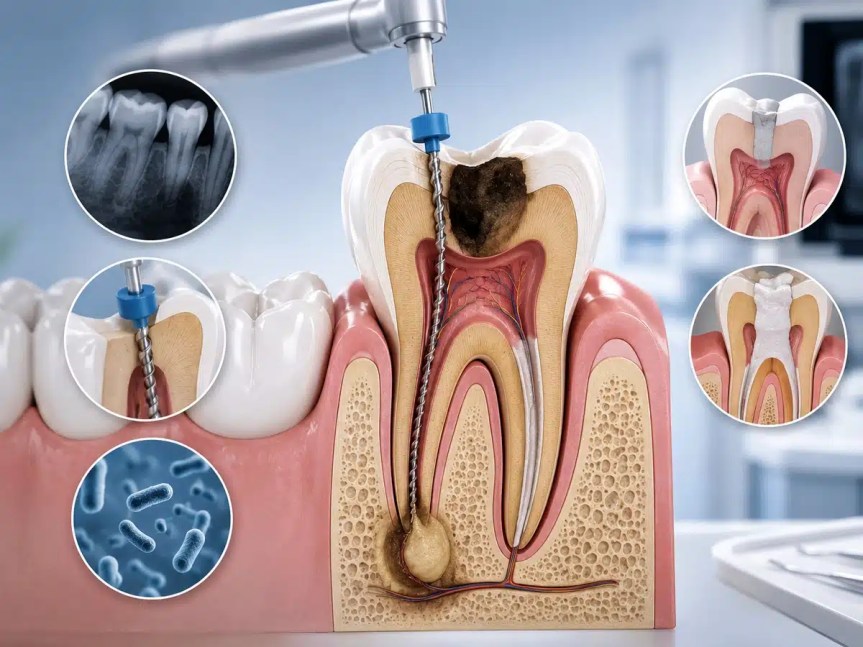
Root canal treatment is designed to remove infection and inflammation from inside a tooth while allowing the natural tooth to remain in place. In many cases, treatment provides long-term function and comfort. Occasionally, however, a previously treated tooth may develop new symptoms or fail to heal as expected. When this happens, root canal retreatment Orange County may provide an opportunity to identify the source of the problem, correct issues within the root canal system, and preserve the tooth rather than immediately considering extraction.
There are several reasons a previously treated tooth may require additional endodontic care. Root canal anatomy can be extremely complex, with narrow canals, curves, branches, and small spaces that may be difficult to identify during the original procedure. If bacteria remain within an untreated portion of the canal system, inflammation or infection may continue.
New problems can also develop after the initial treatment. A restoration may become damaged or allow bacteria to re-enter the tooth. New decay can expose the root canal system to contamination, or the tooth itself may develop a crack or other structural problem.
Symptoms vary from one patient to another. Some people experience pain when chewing or biting, while others notice sensitivity, swelling, or tenderness around the previously treated tooth. In certain cases, there may be few noticeable symptoms, and the problem is discovered during a dental examination or through imaging.
Because these symptoms can have several causes, diagnosis is one of the most important parts of retreatment planning. An endodontist must evaluate both the tooth and the surrounding tissues to determine whether the original root canal system is responsible for the problem.
Dental imaging can be especially valuable in these cases. Traditional X-rays provide important information, while three-dimensional imaging can offer a more detailed view of the roots, surrounding bone, and complex internal anatomy. Magnification can also help the specialist locate small canals or anatomical features that may have contributed to the original problem.
If retreatment is appropriate, the endodontist generally needs to reopen the tooth and gain access to the existing root canal filling material. Previous filling materials are removed so the internal canal system can be carefully examined, cleaned, and disinfected again.
The specialist may look for previously untreated canals, unusual anatomy, infection, or other factors that could explain why the tooth has not healed as expected. Once the canal system has been cleaned and prepared, it can be filled again to help seal the internal space.
The goal of retreatment is similar to the goal of the original root canal: remove bacteria and sources of irritation while preserving the natural tooth structure whenever possible. Retreatment simply addresses a tooth that requires additional attention after previous endodontic therapy.
A final restoration remains an important part of protecting the tooth afterward. Depending on the condition of the tooth and existing restoration, the patient may need a new crown or another restorative procedure after endodontic treatment is complete. This helps protect the remaining structure from fractures and contamination.
Retreatment is not automatically appropriate for every previously treated tooth. In some cases, the tooth may have a structural problem that changes the available options. In other situations, root-end surgery may be considered if conventional retreatment is not recommended or if persistent disease remains near the tip of the root.
This is why specialized evaluation matters. Rather than assuming that continued discomfort means the tooth needs to be extracted, an endodontist can investigate whether the source of the problem can be corrected.
Patients should also remember that symptoms may develop months or even years after the original root canal. A tooth that functioned normally for a long period can experience new decay, restorative problems, or contamination later. New discomfort around a previously treated tooth should therefore be evaluated rather than assumed to be unrelated.
Preserving the natural tooth offers important functional benefits. Natural teeth help maintain chewing ability, bite relationships, and the existing structure of the smile. When a tooth can be predictably treated and restored, endodontic care may help avoid the need for extraction and subsequent tooth replacement.
For patients experiencing discomfort in a previously root canal-treated tooth, root canal retreatment Orange County begins with a detailed evaluation of what may have changed. Delta Root Canal provides specialized endodontic care using modern diagnostic tools and treatment technology to evaluate complex root canal problems and determine whether preserving the tooth remains possible.
A previous root canal does not necessarily mean there are no additional treatment options if symptoms return. Careful diagnosis, retreatment when appropriate, and a strong final restoration can give a previously treated tooth another opportunity to remain healthy and functional for years to come.

